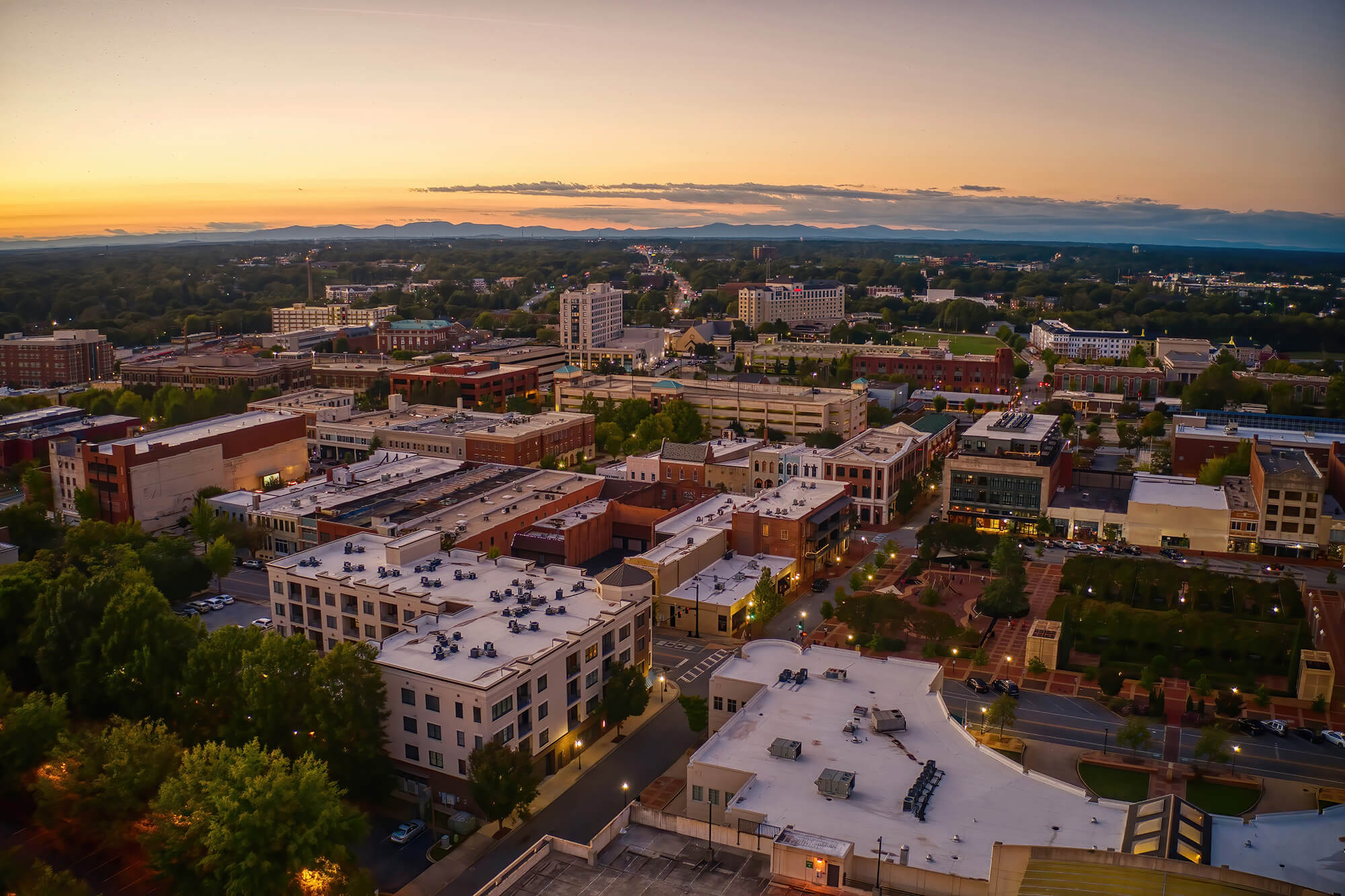
Catch up: NorthMark Compute & Cloud Air Permit Hearing Teleconference
Thank you to all the community members who took part. We heard from many of you, and we're grateful for the questions and perspectives shared. For those who weren't able to attend or would like to revisit the discussion, listen to the full conversation below.
Couldn't make it? Take a listen.
Whether you missed the call or simply want to listen again, the full recording is available now. If you’re interested in the South Pine Street facility, we’d encourage you to take a listen.
Transcript
NorthMark Compute and Cloud (NMC²) Air Permit Hearing Teleconference
Wednesday, June 24, 2026
Editor’s note
This is a near-verbatim transcript of the tele town hall, prepared from an automated (machine-generated) transcript of the call. As a result, some words may be imperfectly captured; isolated unclear words and indistinct passages are flagged inline. Spoken wording is otherwise preserved, including filler and repetition. Only punctuation and speaker labels (added for readability), corrected names and the company name, and clear mishearings of technical terms (marked in [square brackets]) have been changed. No substantive content has been removed.
The audio recording remains the authoritative record; where it differs from this transcript, the recording governs. For further information about some of the changes made, please see About this version at the end of the transcript.
—Transcript starts—
Spencer (Moderator): Hello, and thank you for joining this [tele town hall]. I’m the moderator, Spencer, and I’ll be turning this call over to the team at NorthMark Compute and Cloud (NMC²) briefly. Before I do, I’d like to say that if you have any questions during this call and would like the opportunity to ask a live question, you can do that by pressing star 3. On your telephone keypad, press star 3, and you’ll be placed in a line, and our staff will come on the phone and get on the phone with you, take some basic information about your question, and then you’ll go back into the main call. And at that point, if we’re able to take you live… You’ll be able to go live and ask your question. We’ll say your name, and then your line will be unmuted. So, again, if you have a question, you can press star 3 on your phone and have the opportunity to ask a live question. I’m now going to turn it over to Sarah Knox over at NorthMark Compute and Cloud. Sarah, please go ahead.
Sarah Knox (Director of External Affairs, NMC²): Well, good evening, everyone. Thank you for taking some time to join us tonight. I know that all of y’all have busy lives, and you could be other places, so I want to thank you for being with us here tonight. I genuinely appreciate you spending some time with us this evening. As Spencer noted, my name is Sarah Knox, and I’m the new Director of External Affairs for NorthMark Compute and Cloud, and I live right here in South Carolina. And I’d like to tell you just a little bit about myself before we get into the call tonight. As I mentioned, I live here in South Carolina. I was born and raised here, and I have spent my entire career working in South Carolina. I know that the people on the line and the people of South Carolina care deeply about where we live, work, and raise our families. It’s something I understand, I think, to my core as someone who was born and raised here.
I’m hoping that this is one of the beginning and one of the first conversations that we’re going to have — as many conversations together during my time here. We’re holding this [tele town hall] tonight to give you information about what this project means in your community and the topics that we realize you care a lot about, which are things like air and water quality and noise and dust. We’ve heard those questions and concerns and we want to address those here tonight. So I’m hopeful that over the next hour that we spend together that many of your questions are going to get answered. But I understand that not all of your questions — some of your questions that you have might not get answered tonight. And so one of the things that I want to tell you about at the beginning is that we have a new website that we just launched at www.southpinestreet.com. I would invite all of you all to go onto that site whenever you have the time to learn more about our project. If you registered for this call, you probably already went there. But you can also learn facts about our site at that website, and you can additionally, you can sign up to receive updates from us on that site. And so all of that said, that’s what’s going on at our website.
I’ll tell you a little bit about my goal for this call tonight, and then we’re going to get started. I know we have callers coming in as we speak asking questions. And I’ll just remind folks here, too, if you do have questions and you’re coming in, if you hit star three, you can get in line to ask questions. But my goal here tonight is not simply just to present information to you. It’s really — my honest goal is to hear from you and to listen to the concerns that you have. It means a lot to me that you have taken time out of your day to talk to us tonight. And so I genuinely want to hear from you and the concerns you have. I want to present you with good information and all the facts that we have available to us. But again, my real goal tonight is to hear from you and to start building a relationship with the folks of Spartanburg County.
So around the table tonight, now that I’ve sort of talked to you a little bit about myself and why I’m here tonight and why I’m working on this project, I want to tell you a little bit about the folks around the room. So I’ve got with me some specialists who are working for us and working on our site here in South Carolina. We’re all around a table in Spartanburg County right now, actually. And so occasionally questions are going to come up that I will direct to one of them, and they will answer based on their specialty. With all of that said, it looks like we’ve got people in line who are getting their questions screened through, but I’m going to go ahead. We had, as you know, we had the opportunity for you to pre-submit some questions, so we’re going to run through some pre-submitted questions that I’ll read out that were sent via text last night, and we’ll start taking live callers here in a second.
So our first pre-submitted question has to do with water. And the question reads, what impact can we expect on water usage and quality, and can our current infrastructure handle the needs of this facility? Lane, I have one of our specialists who works on water, Lane, in the room. So, Lane, I’m going to turn it over to you to answer that question.
Lane (Water Specialist): Thank you, Sarah. So to answer that question, based on permit discussions with the city, the infrastructure is well-equipped to handle the facility’s water needs. Our permit has the same parameters as [Kohler] had.
Sarah Knox: Thank you, Lane. Okay, that’s great. The next pre-submitted question we had is about noise. We’ve heard, as I’ve been on this job and been in the community, we’ve heard a lot of y’all ask about sound and noise from this project. So the next pre-submitted question that we had from the folks on this line was… Can you tell me how loud this project is going to be? I want to be able to enjoy sitting on my porch and not hear constant noise once you’re fully operational. I’m going to turn that question over to one of our other specialists who’s at the table with me tonight. His name is Brian, and he’s going to be able to talk to you about noise at the site.
Brian (Engineering / Site Specialist): Thank you, Sarah. So as far as noise goes at the site, we’ve done extensive engineering and design throughout this project and working directly with the Spartanburg County to make sure we meet all of their requirements and we actually want to exceed their requirements. We’ve even specified some of our gear with extra noise attenuation containers for that gear to keep our noise levels below what is required by Spartanburg County.
Sarah Knox: Okay, thanks. Sorry, we’re just tapping around the phone over here, so thanks for that, Brian. Yeah, that’s something, again, that we’ve heard a lot as we’re in the community. Our next — I think we’re going to do about, I think we have four or five pre-submitted questions we wanted to get to before we take some live callers. So the next pre-submitted question we have is just related to what it is that we’re actually doing on South Pine, and the question reads, why do we need another data center in South Carolina? What exactly is it that you’re building? Okay, I’m going to turn that over to one of our other guys around the table with us tonight named Mike.
Mike (Project Specialist): Thank you, Sarah, and good evening, everybody. So why do we need another data center in South Carolina? Well, I think what’s important to remember is the quality of South Carolina and why we chose it. It has a very strong technical and operational skill set in its workforce, the infrastructure, and also what we were excited about was taking a legacy industrial use and repurposing it for a new advanced technology industrial use. And what we’re exactly doing, we are building a high-performance compute[r] center and the accompanying power equipment. A portion of that — of the power equipment specifically — is proposed. That’s an important point to make. That’s the summary of that.
Sarah Knox: Okay, great. Well, thank you, Mike, for that answer. I think we are going to take one more pre-submitted question before we get to some live callers. So I had one more pre-submitted question that we were going to try to give you tonight, and we’ll probably have time for some more of your pre-submitted questions later in the evening as well. But the next pre-submitted question I have is about the air permit, actually, and the air pollutants. So here’s the question. It reads, I live near the site, and I’m particularly worried about the air pollutants your project will emit. How do I know y’all are not going to make my neighborhood a dangerous place to live? That’s a great question, and I’m going to turn it over to our specialists who are dealing with our air emissions at the site.
Air Emissions Specialist: Sure. That’s a really important question. I’m going to talk about several different things here. The first is that NorthMark is proposing to install the best emissions control systems commercially available to, first of all, reduce emissions from the facility. And the emission limits that are proposed in the current draft permit actually exceed limits required by the US EPA. The air emissions that are estimated from the facility were modeled to make sure that the air quality impact from the facility will comply with the current National Ambient Air Quality Standards. And these standards are developed by the US EPA to protect public health and the environment. And all manufacturing industries, such as data centers, semiconductor facilities, chemical facilities, et cetera, all sorts of manufacturing industries are required to comply with these standards. So in addition to that, there will be system monitoring in place to confirm these emission rates and also make sure that the control devices are performing in the manner in which they are designed to work.
Sarah Knox: Well, thank you for that question to the person who submitted that, and hopefully that answer was suffice. We are going to go now to take some live questions. So we have several people lined up. It looks like I have somebody here named Sam who is interested in the size of the power generation that we’ll be doing in Spartanburg County. And so, Sam, I see you have a question about the size of our power generation. I’m going to go ahead and take you live. And in just a second, you should be able to ask your question. Sam, you should be live.
Sam: Hey, can you hear me?
Sarah Knox / Team: Yeah, we can hear you.
Sam: Sorry. Hey, I was calling today. I hear that the power plant is going to be about the biggest polluter here in Spartanburg County. And I was just curious if that’s true and if you had any words on that. Thank you.
Sarah Knox: Thank you, Sam. We’re going to go ahead and… to answer Sam’s question. Thank you, Sam. Thank you for that question. We’re going to go ahead and begin to answer that question just about the size of the power plant itself and the amount of emissions that are coming from that. Mike, I think you were going to answer about the size, and then we can have Jacob answer with the emissions. Why don’t we start with the emissions?
Team: Okay, great. Why don’t we start with the emissions?
Mike: Sure. First of all, I do want to clarify, so the site is — it’s a data center with onsite power generation for their own operations. As far as the relative emissions, it may be true that it’s a large amount in the county when you’re looking at point source data, which means a point source is a specific facility. But when you look at total emissions in Spartanburg County, which is inclusive of all sources — so that’s not just point sources, but it’s mobile sources and fugitive sources, so all emission sources in the county, and that data is available from South Carolina DES. You can get that, that’s publicly available data. The plant’s contribution is actually very small. In fact, the plant’s emissions are anticipated to be less than 5% of total emissions in the county. And when you look at that on a statewide basis, emissions are just a fraction of a percent of the total emissions for the state. And just as a reminder, as I mentioned earlier, air dispersion modeling was conducted to demonstrate that air quality impacts are well below the current national ambient air quality standards, which are meant to be protective of public health.
Sarah Knox: Mike, yes — thank you. Very good. Sam, thanks for calling in tonight. We appreciate your time. In regards to the size of the power plant, our research indicates that it would be — the proposed power plant would be 19th in the state. And also the proposed amount, total amount would be less than two percent — so the energy generation in all of South Carolina. So that was what our research has indicated. So hopefully that gives you some clarity. Thanks, Sam, again, for asking that question. It’s one we’ve heard a lot in the community. And thanks to Mike and team for answering that.
Sarah Knox: The next question we have is from Diane Lee. Diane, I’m going to take you live here. Diane, you should be able to speak now, Diane.
Diane Lee (WSPA-TV): Yes, Sarah, thank you. Diane Lee with WSPA-TV here. We’ve heard some concerns about potential future expansion. So can you tell us a bit about — is there a limit when it comes to the use of power both on and off the grid, the power that you’ll be creating as well as using from the grid? And is there a limit in terms of the water for any future expansion? If so, what are we looking at — what could that potentially be?
Sarah Knox: Okay, well, again, thank you for calling in. Appreciate your time and also your question. In regards to the grid, there’s a legacy power station of 13 megawatts that we utilize, but we have no plans to upgrade it in any way, and therefore not affect ratepayers. Second, in terms of expansion in the future, what is proposed today is all that we have for proposed for the site in total. So we do not currently have any plans for any future expansion beyond what is proposed today. Thanks for that question, Diane. Diane, you do have follow-up questions. We will try to get to that towards the end of the call.
Sarah Knox: Our next question, we’re going to keep taking some live questions here, and then we’ll go back to some of the pre-submitted questions as well. Our next question here is from someone named Lauren. Lauren looks like she has a question about her power bill and how our site might affect her power bill. So, Lauren, give me a second. It looks like, Lauren, that you should be live now. Lauren, can you hear us?
Lauren: Hey, yeah. Can you hear me?
Sarah Knox: Yeah, we can hear you.
Lauren: Wonderful. I’m just concerned because I feel like my power bill is going to go up because of all of this. So if I send you the bill for you to pay, are you expecting me and my family to subsidize your data center?
Sarah Knox: Lauren, thank you for that question. I know it’s one, again, that we have heard, especially as we… as we look at centers across the nation that are not ours or different than ours, we hear a lot of people in other communities worry, and this community as well, worry about what our site on South [Pine] is going to do to their power bill. Mike sort of already mentioned it, but I want to reemphasize that 97% of the energy that we are going to use on our site is going to be generated by us and for us if we are able to get the permit and build the site out the way that our plans have laid out. So again, if our plans and our proposals go through, then 97% of the energy that we use will be created for us and by us. There is a small legacy grid connection at the site that’s been there for 30 years. But again, because of the fact that we are creating our own power, we don’t anticipate there being any adverse effect on your power bills here in Spartanburg County. That’s just not what we would anticipate, again, because we’re generating our own power. And unlike a lot of the sites that you might see across the nation, we are not going to be connected to the grid outside of that small legacy grid connection that has been there for over 30 years. And so that hopefully answers your question sort of just about power bills.
Sarah Knox: And then I think — I know we have, again, I know we have several people who pre-submitted. We’re going to try to get to one or two more of these live calls before we go to some more pre-submitted. So I have a live call, Christian, here. So Christian, you should be able to speak now if you can.
Christian Moschelt (Question Courier): Hi, yes, this is Christian Moschelt with the Question Courier. So obviously a lot of data centers that are being built are hyperscalers for AI operations, but they’re not all like that. And so I’m wondering if you can tell me exactly what is the purpose of this data center and who are the clients that are going to be using the data center services?
Sarah Knox: Yeah, Christian, thanks so much. We’re going to have Mike.
Mike: Christian, thanks for the call tonight and I appreciate the question. Data center is for our own organization’s use. And what we do with the data center, Christian, for the High Performance Compute Center, is scientific research, engineering research, and analytical workloads, all for our organization. Does that answer your question? He can’t. Oh, he can’t.
Sarah Knox: So, yeah, we’ll have to — Christian, we’ll have an opportunity potentially at the end of this call for you to do a follow-up. And if not, you can obviously also reach out to us, and we will try to provide you with a follow-up as well. We’re going to take one more question live before we go back to some of our pre-submitted questions. And so it looks like I have somebody on the line named Liza or Lisa. I’m not sure. But Liza or Lisa Lopez, we have a question for you about how this is going to impact small businesses. So I’m going to take you live.
Lisa Lopez (Just Myrick Media): Hello. Okay, so I’m Lisa Lopez, co-owner of Just Myrick Media. We actually provide AI consulting for small business owners in the upstate. My question is, how will your high-performance computing center translate into practical AI benefits for Spartanburg small businesses? And what commitments are you making to ensure those capabilities are accessible locally?
Sarah Knox: Well, thank you, Lisa. It’s a question that is really great, and we are going to have to look at exactly how AI might be helpful to some of the small businesses in Spartanburg County. One of the things that I would like to answer, though, because I think this is a question on a lot of people’s minds, is just what sort of economic benefit in general they can expect to see from our project, thanks to the investment that we’re making in the community. What I’m happy to say is that we have over 1,400 construction workers on site right now who are working every day and living in the community who are, you know, making a wage and spending their dollars in small businesses around the county. We also have 150 permanent workers that we plan to — either already, they’re already on site or we plan to have on site. And similarly, they are living in the community and spending their dollars at small businesses around the county. On top of that, we have fees that we are paying to the county as well as part of our project. Those are going to start. They’re projected to be in the $10 million range starting this year, going up to the $15 million range as the project comes fully online. And will continue to feed into the Spartanburg County budget line for many, many years to come as a way for Spartanburg County. And Spartanburg County can use that funding however they see fit, schools, roads, public safety, et cetera. And so that’s the impact that our project is going to have from a fiscal perspective in the community. So thank you for that.
Sarah Knox: We are going to go, again, we’re going to go just take a couple more of our pre-submitted questions because, again, I know a lot of you all pre-submitted questions, and we want to make sure that we’re taking those as well as the folks who have called in live. And so our next question here is, just pulling it up now, is from — okay, this is about chemicals in the wastewater. So the question reads, I’ve heard you’re going to be adding dangerous chemicals, so the wastewater coming off of the site. Is this — or how is this going to affect my drinking water? I’m going to hand that over to our specialist named Lane.
Lane: Hi. Thank you so much for the question. It’s a great question. So the only chemicals that will be used in the wastewater are the federally required chemicals that we have to use per regulatory standards. All wastewater is going to be sent directly to Spartanburg Sanitary Sewer District via our industrial or sewer drains. And we also must meet their permitting requirements, which we’re standing up with them right now. So that is before it ever leaves our site. The system — and also the system is not tied to potable water lines from our site as well. Thank you.
Sarah Knox: Thank you for that. Our next… This pre-submitted question is to do with something we hear a lot, again, in the community, which is dirt, debris, and dust. The question reads, my parents have lived in their house for decades. Recently, with the construction, they have seen a ton of dirt and debris all over their house. What are you all going to do about this? I’m going to hand that over to our specialist here in the room with me, Brian. And so, Brian, let me hand you the phone, and you can take that question.
Brian: Okay, thank you. And thank you for whoever entered this question in. First, our apologies for — it’s not our intent to bring all the dust and debris onto your parents’ home. And it is a concern of ours as well. So, as you know, on a large project like this with all the excavation and the archwork and civil work that has to be done, that does leave a lot of exposed dirt on the site. On windy and dry days, we do see a lot of dust creation. We try our best to mitigate that. We’re ever-expanding those mitigations. Some of the things we have in play today, we have multiple water trucks throughout the site maintaining the roadways damp or wet that blow the dust, speed limits on site for all of our vehicle traffic. As you’ll start to see as some of the civil work comes to a close, hydro seeding, using mats and things like that across the site to hopefully start limiting that dirt. We also use truck washing stations for any vehicles leaving the site to minimize dirt out on Pine Street. And then we’ve employed some street sweepers so you can clean up some of the dust on Pine Street and Southport. We understand it’s a work in progress. Our mitigations are ever-growing. We’re looking at other ways to do it. And again, we apologize for any of the dust and dirt that it is getting onto your parents’ house.
Sarah Knox: Thank you, Brian. Let’s just see. I think we were going to take a couple of more pre-written questions before we move on to taking some more live callers. So our next pre-written question, our pre-submitted question is, my home is my single biggest asset, and I’m worried about losing money every day that y’all are building this facility. How do you respond to that worry? I’m going to turn that over to Mike, who you heard from already tonight, to answer that pre-submitted question.
Mike: Thank you again, everybody, and I appreciate that question. Home value is, of course, very important to all American households. And I think what’s important to remember here is home value is impacted by your surrounding areas. The factors that then impact your home’s value are such things as a tax base. And as previously mentioned, this project here will add significantly to the region’s tax base. It is creating not only a couple hundred jobs, well, more than 150, that’s for certain. It will also create technical, skilled, good-paying jobs, which is a positive attribute to home values. Further, the community investment that NorthMark Compute and Cloud is investing in the community helps solidify the community, which further solidifies home values. Also, as a note, if you’d like, in 2025, George Mason University conducted a study on data centers, high-performance compute centers’ impact on a neighborhood’s home values. So I think if you just search that, George Mason University 2025 home value research, I think you’ll find it an interesting read. And what it concludes is a data center is neutral to positive to home values. Thanks again.
Sarah Knox: Thanks, Mike. Okay, we know that there’s a lot of y’all who are on the phone who are trying to get in your live questions as well. So again, we’re going to continue to try to go back and forth between some of our pre-received questions and our pre-submitted questions and the ones who are coming in on the call now. And just to note, I’ll just note one thing. If you’ve joined the call late, if you would like to get in line to potentially have your question asked live on the call, then you can at any time press star 3. Star 3 will take you in to the Q&A line where you’ll be asked your question and your name as well as your zip code. Just so everybody knows, the reason we’re asking for zip codes is we’re going to try to — we’ve been trying to hear tonight prioritized questions from residents of Spartanburg County. And so that’s why we’re asking for your zip code. And so the next question that we’re going to take is from — looks like it’s from Baker. And, Baker, we’re going to let you go live. So, Baker, you should be live and able to speak.
Baker (Spartanburg Herald-Journal): Yeah, thank you. My name is Baker. I’m with the Spartanburg Herald-Journal. And a couple of things. First of all, I wanted to get the names and spelling and, I guess, titles of the folks on the panel there, Sarah. And if you don’t want to do that right now because it takes time, you can certainly just email me. You know how to get in touch with me. So I just want to make sure I had that. And then also anybody on the call who would like to offer a perspective or comment to me, my email address is bmaultsby, that’s B-M-A-U-L-T-S-B-Y, at gannett.com, G-A-N-N-E-T-T. We’re interested in, you know, folks’ perspectives on this. The question, thank you, is I wonder if the proposed permitting does not come through from the state or any local government, what would be the future of the project? If the 450 megawatt power generation plant is not something you’re able to construct and operate, what then, you know, happens to the facility?
Sarah Knox: Yeah, thanks, Baker. I hope everybody can hear me now. So, Baker, just first off, yeah, we can get with you separately to make sure you understand who all was on our call tonight and sitting around our table here in Spartanburg answering these questions. To your question about what would happen to the project next, I’m going to turn that over to Mike, who was going to talk about what would happen if we didn’t get the permit for the 450 megawatt generation.
Mike: Well, Baker, again, thanks for your time tonight and calling in. And on your question, you know, what would happen if we did not receive the permits? You know, I don’t know. I can’t answer that right now. I don’t know. So that’s not maybe super clarifying, but I don’t know. But again, thank you for your time tonight.
Sarah Knox: Thanks, Baker. Again, we’ll try to get back to you after this call with some of the people who are around the table tonight. The next question we’re going to take is from Alva Pack in Spartanburg, and his question is related to our request for… and so yeah.
Sarah Knox: I’m here, you can ask your question.
Alva Pack: All right, well, I was curious why y’all didn’t ask for the 450 megawatts at the beginning when you got your first permit. Why did you just ask for 48? Why not the 450 all at once? It’s a three billion dollar project. It seems like your engineers would know that you needed 450 megawatts, not 48.
Mike: Hello, Alva, and thanks for calling in. We appreciate the question and its time. Our initial submittals to the respective agencies all indicated the 450 megawatts. Why we submitted our air permits in two different batches, so to speak, was because of construction sequencing, ordering of equipment. And all of the requirements of the submittals, which are extensive, we needed to have all of these specifications of all the different pieces of equipment. And by the time we received those, and in conjunction with our construction sequencing, is how it led to two different submittals. But it is all additive to what was initially proposed.
Sarah Knox: Thank you, Alva. Thank you, Mike, and thank you [— name indistinct] for asking that question.
Sarah Knox: We are going to take one or two more live questions here, and then we’re going to get to, again, trying to go back and forth between some written questions that were submitted to us last night via text versus some of the ones that are calling in now. And so the next question that we’re going to take is a question from Joseph related to how loud the project is going to be. You should be live now.
Joe Prochak: Hello, this is Joe Prochak. I have a question regarding the noise. And I understand that you’re going to meet the specifications of the county. To my understanding, the specifications require a decibel amount of 75, which is about the sound of a garbage disposal running. It’s pretty loud. It does not say anything about decibels in the [C scale], the dBC, which is where many of the areas that have large computing centers have huge issues because it’s a very low frequency hum that is very aggravating and travels a very long distance. What are you doing to prevent that from being generated and how are you going to do to mitigate that?
Sarah Knox: Thank you, Joe. I’m going to have two guys answer that question related to sound. I have Brian and Mike here who are both going to talk about what we’re doing to mitigate sound coming off of the site.
Brian: Thanks for the question. It’s a really good one. We talked earlier about we’re going to have to meet local and state regulations for the sound at the property boundary. We’re also trying to go beyond that. Some of the equipment that we have specified with the sound attenuating enclosures on that equipment, silencers up on the stacks, and then we can talk about what we’re doing further beyond that, right, because it’s got to be a layered approach, because you’re exactly right, that noise carries across the site, and even though their numbers are kind of low, it’s still audible. So there’s some other things that we have to work with, and Mike, you can talk about that. We’re working with some landscape designers to even go further beyond what our requirements are.
Mike: Yeah, thank you, Brian. Yes, that’s correct. That first layer right at the equipment, but then the second layer for sound noise absorption, if you will, there will be a very robust landscaping beautification plan implemented that will then further — it will incorporate mounds, trees, shrubs, sound attenuation panels, et cetera, all prior to the property line, of course. That will then — that layer will act as a second barrier to address sound going out into the neighborhood. We understand now — can’t quite see it now, but it will happen. And we think once all of these initiatives are implemented, it will address noise rather well. We’re confident of that. So, again, thank you. Appreciate your question.
Sarah Knox: Our next live question comes from someone named Julia. Julia is asking about the town hall on the website. Julia, if you’re still there, you should be able to speak now.
Julia Keener (WSPA): Hi, I’m Julia Keener. I am also with WSPA. I want to start off with if you all could also loop me in to the first and last names of everyone at this table with Baker, that’d be much appreciated. My email is j keener, K-E-E-N-E-R, at wspa.com. Now for my question. Clearly, between the tele town hall, the South Pine Street website, we can recognize that NorthMark is trying to build trust between themselves and residents. Why is this so important to the company, and what else do you think can be done to continue building that trust?
Sarah Knox: Uh, thank you. We will — yeah, I will — um, I will circle up with you after this call, sort of about the folks who are sitting around the table with us tonight. Listen, the project that we have in Spartanburg is a long-term investment here in the community. I think you’re right to say that our initiatives that we’ve been doing recently with the town hall, with the website, is to start building some trust with community members. But I in no means think that that starts here — but it doesn’t end here. We’ve been having some meetings with neighbors around the community. We have been having more frequent engagement just with the people who live right by the site. I talk to folks regularly on my phone and in person who live in the neighborhood to hear their concerns. Again, that’s the beginning. Our plans are to really be a part of this community and to be a good neighbor. That’s going to look like a lot of different things. We are anticipating having some more town halls, some likely in person as well. This one came together quickly, and it was just easier to do with a tele town hall tonight as it was coming together fast. But we anticipate having some in-person town halls as well, and again, more of that community engagement.
And then we anticipate that we will also be investing more in this community and some of the special places around the county. We’re also partnering with some of the public safety work that’s happening here in the county to make sure that all the public safety officers have what they need and if we can help provide anything else that they need to make this county an even safer and better place to be, that we’re providing that where we can. You mentioned the website. I’ll just talk a little bit about what the website has on it. The website has facts and figures about the project we’re working on. It also has a place where you — if you’re on this call now — anybody in Spartanburg County or anywhere in the state of South Carolina is interested in being a vendor on our site. We just today launched a new link on our website that will allow you to sign up to be considered as a vendor for our site in Spartanburg, and we are prioritizing South Carolina companies for that. And so that’s another way that we’re trying to build trust with the community.
I’m happy to say, and I had this, you know, it’s something that I was hoping somebody would ask, because one of the things, as someone who’s from South Carolina, that I’m really proud about is the fact that right now, one in three of the workers at our site is from South Carolina. And so we’re not just — when we say we’re coming in and being a part of the community, that’s not just lip service. We are hiring South Carolinians for both at the site to work, and we’re bringing South Carolina companies in to provide those third-party services as well. And so, again, through our activities in the community, meeting with neighbors one-on-one, talking over the phone, answering questions whenever they have them, holding this tele town hall, setting up that website, using South Carolina vendors and South Carolina workers, that’s how we’re going to start building trust, and that’s going to evolve over time as we hear from y’all and learn what you need and what you want in the community. And so that is that. Our next question — and I hope I answered your question. If you have a follow-up, please feel free to reach back out.
Sarah Knox: Our next question comes from Cleo. Cleo, you have a question. I’m not able to see the whole thing, but Cleo, you should be able to hit — you should be able to speak now if you are able to.
Cleo: Okay. Hello, this is Cleo. I’m a resident of Spartanburg County. Can you hear me?
Sarah Knox: Yeah, we can hear you.
Cleo: And I think my question was already asked a little bit different flavor, but I feel like I and the other residents of Spartanburg County were misled. Why were we not told from the beginning that the… on the site was to be a 450 megawatt site?
Mike: I can appreciate that question. It’s understood. You may feel that way, but again, I will reiterate NorthMark’s initial submittal to the respective agencies indicated the full plan of 450 — more than 400 megawatts of power. It’s unfortunate you feel that way. Maybe the message didn’t get out properly. I don’t know. Our initial submittal indicated such.
Sarah Knox: And Cleo, I’ll just say here, listen, we know that we need to do a better job about communicating to people in the community, and so that’s what we’re doing — trying to start doing here tonight, and our goal is to continue doing that in the future. Mike’s 100% right that it’s been communicated to some of the decision makers in the very beginning. But part of the reason I’m here is to make sure that it gets communicated to you folks around town. And so that’s why we’re here tonight, and we’re going to continue to talk with you all. And so thank you for that question.
Sarah Knox: Our next question comes from Mike, and it’s regarding the cooling system. So Mike, who has a question about the cooling system, you should be live.
Mike (caller): I am. First, I want to ask, though, are you receiving any additional tax breaks besides the [FILOT]? But are you going to be using evaporative cooling for this building? And if you’re just using mechanical, is it going to be closed loop on the heat absorption side? Is it going to be open loop or closed loop on the heat rejection side? And what’s going to be done with water that’s used, the water and chemicals used within this system as this system needs maintenance?
Mike (panel): Okay. That’s two questions, Mike. I’ll start with the first one. We have not received any additional tax breaks, and we have no plans to submit for any one. Now I’ll turn it over to Brian to talk about the mechanical system.
Brian: Yeah, and great question about the cooling. So the first part of it, we’re not using evaporative cooling like you see in most of your hyperscalers, evaporative cooling. We are using a… Second part, it’s a combination closed and open loop system, right? So closed loop inside — a closed chill water loop inside the building to provide the actual physical cooling. On the outside, we’re using water-cooled chillers. Of course, you know, I’m assuming you probably know water-cooled chillers. We can use [economizer] mode to mitigate our water use, taking care of some of it when the wet bulb is agreeable for us. The third part, I think Lane had already spoken to earlier about what we do with that water, right? She spoke earlier about how the water is treated for EPA recommendations and requirements, right, because you do release water droplets in the air, but any of that water that we no longer use gets returned back to the wastewater system with the county to be processed. Thanks for the question. I hope that answers.
Sarah Knox: It looks like our next caller is Diane with a follow-up question. So let’s let Diane go live. Diane, you should be able to speak now if you want.
Diane Lee: Great. Thank you. So in terms of the emissions, is an outside agency going to be monitoring the emissions and the pollutants? And if so, how frequently will that be as far as the generation of power?
Sarah Knox: Great. Thanks for that, Diane. I’m going to turn it over to one of our specialists here, Stephanie, to answer that question.
Stephanie (Air Emissions Specialist): Yeah, absolutely. Yep, sorry. Sorry about that. Yeah, thanks for the question. Yes, so there’s a couple things there. Some of the pollutants will need to be continuously monitored, so there will be a system on site for them to monitor emissions continuously. They will also be doing stack testing of emissions from the equipment to confirm the emission rates that have been stated. And then those get reported to South Carolina DES on a periodic basis. And those emissions rates and amounts are publicly available and can be requested from the agency and are compared to their limits and standards in the permit. So all of that is part of it. There are requirements in the permit to monitor and measure all of those and those are reported on a periodic basis.
Sarah Knox: Thank you, Stephanie, for that. Our next question that we’re going to take live, and then we’re getting a little bit close to the end of our hour, so we’re going to take a couple more questions live before we wrap it up with some of the other pre-submitted questions we got and close out. But our next question that we’re going to take live comes from Brandon, who was asking about the decision-making process and government approval. And so, Brandon, I think you should be live now.
Brandon: Yes, Sarah. Thank you for taking my question. I am a resident local to where the site is, and my dad, he was one of the… former employees of Kohler and we’re very familiar with the grounds there. But my question is, I know some of these power grids that are going up across the United States, they use a lot of power to that. And I know y’all went through the question before on that of where, like, what is the effect of our power grid versus y’all’s, with it coming from the former power plant that’s on the property, and also who is making all of the decision-making decisions through y’all’s process of everything. I know it’s kind of a lot to ask, but I know there are some government decision-making on some of them across the United States, and that’s where my question is at. Are y’all having a committee for that, for like meetings and the community around to kind of help influence the decision making?
Sarah Knox: Brandon, I want to make sure I fully understand your question. So I’m going to ask you a couple of clarifying questions to make sure that I can answer it fully. I think you have some questions about how we’re generating power and how that might affect the grid in Spartanburg County. I heard that. Again, if I’m saying anything not right, you correct me. I’m hearing though that you’re interested in how we’re connected to the grid and how we might impact the grid. I hear that you’re interested in what the process is for us to get some of our permits approved. I think that’s what I hear you saying. And then it sounds like you’re also asking us to talk a little bit about our community engagement efforts in Spartanburg County. Is that a good — or again you tell me, you should — you’re still live, you tell me.
Brandon: Yes, ma’am. The last question was kind of how — I know y’all said y’all are putting money towards the county and stuff like that, but what about the individuals that can see an impact through like the money that y’all are giving to the county? Because I know sometimes we’re taxpayers and we don’t see the money as we would like to. What is the process of that, of being the county engagement?
Sarah Knox: Okay, gotcha. Okay, great. We’re going to take that in a couple different parts. We have several people around the table who are going to answer your question. I’ll start off by talking a little bit about our community engagement and the efforts, the fees that we’re paying. As somebody mentioned already, the fees that we’re paying to the county and how that might benefit the individual citizen in Spartanburg County. So as I mentioned earlier, we’re really beginning our efforts in earnest and have begun our efforts in earnest to hear from y’all and to listen to y’all’s concerns. We’ve been sitting down with neighbors and their homes who are close to the site. We’re holding this tele town hall tonight, and I will be at the DES hearing tomorrow at the availability session at a table so that I can hear from even more of y’all if you are going to be there, and I’m looking forward to meeting many of y’all there. As I mentioned earlier, we are projected to pay fees of about $10.5 million starting in this year, going up to 15 million. How that money is spent is up to Spartanburg County. We don’t have any say in how those dollars are directed. What I can tell you is that we anticipate that that will help with things like education possibly, public safety, could help with roads. Those are all just my guesses. Again, it’ll be up to Spartanburg County to decide how they allocate that money, but those are the types of things that we would anticipate that funding would be used for. And so my hope is that this project and the funding that we’re giving to the county with our project, that you’re able to see an improvement in your individual life, again, whether it’s through the school that you attend or you send your kids to, the roads you’re driving on, or, again, the public safety services that you’re receiving. You had a question about the power generation. I’m going to turn that over to my co-worker, Brian, to answer that part.
Brian: Yeah, great question on that. So power generation. On the site right now, it’s not a power plant on the site. There is an existing substation, which we are limited to about 13 megawatts that we already received from Duke. And that is the limit. There’s no interconnect agreement for us. So that’s physically the most power we could draw from that existing substation. Anything beyond that, we would have to self-generate, which is involved in our proposal for self-generation.
Sarah Knox: I’m hopeful that that mostly answered your question. I know, again, I know we had several parts. And so if there are any other questions that you have, please feel free to, again, either submit it to our website or, like I mentioned, I’ll be in the availability session tomorrow at the DES hearing. And if you want to come up and tell me about your question again, I’ll try to get you some more answers tomorrow night, too. So hopefully, though, that did answer some of your questions.
Sarah Knox: The next question we’ll take — we’ll take one more live caller before we round out the night with a couple more pre-submitted questions. And so our next live caller is Blake, who is asking about the pretreatment of wastewater. Blake, you should be able to speak now.
Blake: All right. Thank you, Sarah. This is Blake across the street from the [Kohler] plant, y’all’s new site. My question is, I think I misunderstood. There was not going to be any returned wastewater to the Spartan River Water System. I think I misunderstood that. But, so my understanding was that y’all were going to pre-treat the wastewater and return it to the system. Is that — and what’s going to be done as far as heavy chemicals that y’all will be having to prepare to aid the cooling of the computers? That’s it.
Sarah Knox: Thank you, Blake. That’s a really good question. So I kind of mentioned this earlier about what we’re doing with our wastewater, but this is a good pivot to that on how you’re talking about incoming versus outgoing is how I heard that.
Lane: So we have [effluent] guidelines for wastewater discharge. That’s per the EPA and also that’s per the Spartanburg district that we’re sending our wastewater back to. Now we have incoming water from the city of Spartanburg. That incoming water then goes through our systems like Brian mentioned earlier. And we do have permitted guidelines that the district of Spartanburg Sanitary Sewer location has given us that we have to follow. So those guidelines have certain things that we have to put into our water to help destroy harmful microorganisms like algae, bacteria, and all that fun stuff to make sure we meet our permit and we don’t omit or send back anything that’s harmful to the city, or the Spartanburg Sanitary Sewer District, should I say. Now, the sewer district, they’re the ones that officially treat all the wastewater. We just meet their parameters before we send it back to them. Hopefully that answers your question.
Blake: Not really.
Sarah Knox: Okay, gotcha. Well, we can follow up with you, Blake, to make sure that you get all the information that you — and can give you more of that data. So we’ll follow up with you. And you can, again, you can either submit that question through our website or you can find us tomorrow night at the DES hearing.
Sarah Knox: I know we have a couple of folks who are still trying to get their questions in, so we’ll give it another minute or two if folks are still trying to get in. And, okay, well, I think — now I’m looking. We’re going to do these questions fast. We only have three minutes left. So what we’re going to do now is take some of the last pre-submitted questions that came in and then just close out the evening. And so the next question, or one of the questions that we got a lot of, just regards around the DES hearing process tomorrow. Obviously, we’re not DES, but we’ve gotten a lot of questions about what that looks like. And so I’m going to turn it over to one of our specialists to talk about what the DES permit process looks like.
Stephanie: Yep, absolutely. And this is really important. So as a new source of air emissions, NorthMark submitted a permit application to South Carolina DES for the facility in accordance with state requirements. And those are really prescriptive requirements. The permit application — the requirements for submitting that application are spelled out in the rules for South Carolina. Some of the things that have to be submitted include a project description, air emissions, a description of proposed emission control systems, and then Mike alluded to — you have to know the exact equipment you’re installing and specifications for those as well as control systems and that sort of thing. And we talked about several times that we also conducted an air dispersion modeling analysis to make sure that the facility would be in compliance with National Ambient Air Quality Standards. Once that was submitted, DES reviewed all that information and made sure that the facility would be in compliance with requirements as well as those emission standards. After that, they developed a draft permit application with — or developed a draft permit with limitations and testing requirements, record keeping, reporting requirements, all of the things that the facility will have to comply with. Once that draft permit was developed, they sent it off to US EPA Region 4 and they got an opportunity to review the permit and make comments on it. And they even had some feedback and included some additional requirements that NorthMark has to comply with. Once that process was completed, the permit was then issued for public comment and the public hearing was scheduled, as you all know, for tomorrow. So once that public comment period commences, the DES will then go through all those comments and they will respond to those and issue a written response to those comments.
Sarah Knox: [Another] topic that we got a lot of questions about are just related to the lighting around the site. And so Brian is going to talk a little bit about how the lighting at the site works and how we’re going to try to mitigate that.
Brian: Thanks, Sarah. And I think when we answer this question, it’s really two-part. So there’s current lighting on the site during the construction phase, as any of you have driven by there in the evening. There’s a lot of portable lighting. So we’re kind of held to the OSHA rules for providing light for workers, depending on what their craft is and what work they’re actually doing. There’s certain requirements for the amount of light we give them. I will tell you, there’s been some cases. In fact, we’ve even worked with some neighbors across the street where the lights have been turned and have been faced out toward their house. We’ve identified those and tried to get back and take action to get that light facing back into the site. So there’s that first part there with some of the construction lights. We’re working on some — some improvements in our construction lighting to install some fixed lighting that points only back at the site, has filters on the back to prevent that cone of light from escaping the site as best possible. And then there’s the second part about the lights. A lot of people ask about light pollution moving forward once they’re operational. Again, there’s a minimum requirement for lighting for our personnel, whether they’re traversing the site or working on equipment, inspecting equipment during the evening that we have to meet. But there are some things that we’re trying to do there with some of that lighting just through the design itself to minimize the lighting impact off the site. I hope that answers the question about lights and both in construction and moving forward into operations.
Sarah Knox: Thanks, Brian. I guess we got — and I know we’ve already sort of tried to address this, but we got a lot of questions related to who was on site working. And so I’ll just say it again, that we have about 1,400 of our — 1,400 construction workers on site right now. And we anticipate around 150 full-time permanent workers at the site. And again, I’ll just say it again because it’s a number that I’m proud of. One in three of those workers is from South Carolina. And again, we have a lot of questions about that and about potential vendors. And so I’ll just note one more time that you can go to our new website, www.southpinestreet.com. And there is a lot of information on that website, including things about the site, as a place for you to submit questions. And then there’s also a place where if you’re interested in being a vendor, you can submit your — your information to be put on a list, and we’re prioritizing South Carolina vendors. But I know at 7:02 we’ve gone over our time just a little bit here. I want to thank all of you who have joined our call. We’ve tried to take as many live questions and pre-submitted questions as possible. I know that we did not get to everybody tonight, and I apologize for that. This is just the beginning of a conversation that I hope to have with all of y’all. I will be at the DES hearing tomorrow. I will look forward to seeing many of you there. I know some of us have already spoken one-on-one and in person at your homes, and I look forward to continuing to do that more in the community. So, again, thank you tonight for being with us, and I hope that this has been a beneficial hearing and town hall for you all. I know it has been for us to hear some of your questions, and so, yeah, thank you so much. I hope you all have a good night. Thank you.
—Transcript ends—
About this version
This is a faithful, near-verbatim record. Spoken wording is preserved, including filler, repetition, false starts, restarts, and short back-and-forth exchanges (e.g. “can you hear me / yeah, we can hear you”). Nothing substantive has been removed. Only punctuation, paragraph breaks, and speaker labels have been added for readability. The underlying source is an automated transcript, so wording is only as accurate as that machine transcription.
Corrections applied throughout: “Sarah Nux” → Sarah Knox; company-name variants → NorthMark Compute and Cloud (NMC²); “Elaine” → Lane; misheard forms of address (“Sally”/“Sharon” → Sarah; “Alvin” → Alva); “Telephone/Pella Town Hall” → tele town hall.
Square brackets [ ] mark an editorial correction or clarification, used for clear mishearings of technical or proper terms: [economizer] mode, [effluent] guidelines, [FILOT], [Kohler], [South Pine]. Isolated unclear words from the automated transcription (e.g. a stray “doctor” mid-sentence) and an indistinct name (“Dr. Cox”) have been omitted and are noted inline where relevant. Spoken figures are left as said.
Still have a question?
If we weren’t able to get to your question during the call, or if something new comes to mind after listening in, you can submit it here.
For more background on the facility, visit our facts page.